
Dietary & specialty candy · Wholesale & bulk
Sugar-Free
Quick answer
Imported sugar-free candy is available to order by the case from CandiesWholesaler for buyers across the US and Canada, with a 3 kg minimum. Open to shops and private customers alike. Prices are shown to everyone; open a wholesale account for account pricing and Net-30 if you order regularly.
Sugar-free imported candy has shifted from a niche request to a standing line item on wholesale orders across the US and Canada. Buyers stocking pharmacies, natural-foods retailers, specialty grocers, and foodservice accounts now expect a credible free-from set rather than one or two token SKUs. This page groups 17 bulk products that carry a sugar-free attribute, sourced from Italy, the USA, Finland, Greece, Holland, and Sweden, so you can assemble a section that reads as deliberate to the shopper instead of scattered. The breadth of origin countries also gives you a story to tell: a sugar-free shelf built from Italian, Nordic, Greek, Dutch, and American makers signals selection rather than a single supplier filling a gap.
What sits inside the sugar-free assortment
The selection spans five candy types, which is wider than most sugar-free shelves you will encounter. Licorice carries the most depth here: black soft licorice, licorice bears, salty licorice formats, and Italian licorice shapes such as fish and berry pieces. Hard candy, gummies and jellies, chocolate, and mints round out the range. That variety matters at the buyer level because a sugar-free shopper rarely wants only one texture. Pairing a chewy gummy peach ring against a firm coffee hard candy and a filled chocolate gives a customer reasons to add a second and third unit to the basket. A shelf that offers only one chew or one hard candy caps basket size; a shelf with five textures invites the multi-unit purchase that makes the section worth the space.
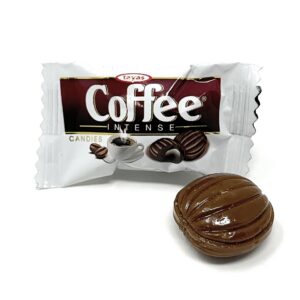
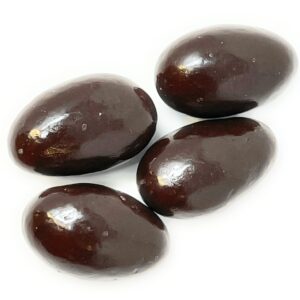
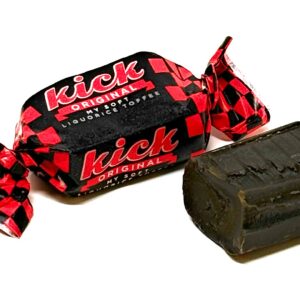
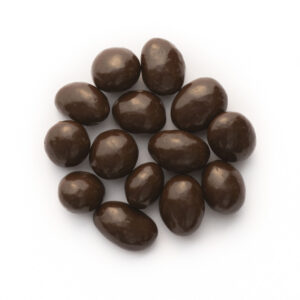
Representative products in the group include a black soft licorice in a 2 lb format, a butter-filled chocolate candy, licorice bears, raspberry and salty licorice skulls, sugar-free peach ring gummies, no-sugar-added dark chocolate peanuts, Italian mini fruit jellies, sugar-free licorice candy, a sugar-free coffee candy, assorted fruit candy, and two stevia-sweetened fruit lines in mixed berry and green apple. Brand depth comes from Mangini, Italgum, Finnska, Pallas, Gustaf, Bubs Godis, Albanese, and Sconza. Color coverage runs across black, brown, red, green, pink, and assorted, which helps when you want the bin wall to look intentional rather than monochrome. Pack weights cluster tightly between 2.0 and 2.2 lb, which keeps your case math and shelf planning consistent across the set.
Reading the label is the buyer’s job, not ours
Every product in this group is grouped because its listing carries a sugar-free attribute, and that is exactly how you should treat it. Confirm the claim on each product page and against the manufacturer’s packaging before you commit an order or make any representation to your own customers. Some items are described as no-sugar-added, some use stevia, and some use sugar alcohols common to sugar-free confectionery. Those are not interchangeable on a label, and the wording your retail or foodservice customer expects may be specific. The stevia-sweetened mixed berry and green apple lines, for example, will read very differently to a natural-foods shopper than a no-sugar-added chocolate does. We do not make medical or certification claims, and you should not pass any along. Read the ingredient panel, note the sweetener system, and verify it fits the account you are selling into.
The same discipline applies to allergens. Products in this category have surfaced soy, tree nuts, peanuts, wheat, and milk among their listed allergens. A sugar-free shopper is often also managing other dietary needs, so do not assume sugar-free implies allergen-free. The no-sugar-added dark chocolate peanuts obviously carry peanut, and chocolate items can carry milk and soy. Wheat appearing in the allergen data is a reminder that a sugar-free attribute says nothing about gluten. Check each panel. If you merchandise a free-from endcap, keep allergen call-outs visible so the shopper does the final confirmation at the shelf.
Cross-contact and honest shelf language
Imported confectionery is frequently produced on shared lines, and sugar-free pieces are no exception. Use plain cross-contact language on signage and in your own product descriptions: state that items are labeled sugar-free, point the shopper to the packaging, and avoid absolute safety guarantees. This protects the account and keeps you clear of claims the source data does not support. There is no kosher certification recorded across this group, so do not imply one. When a customer asks whether something is safe for a specific condition, the correct answer is to direct them to the manufacturer label rather than to vouch for it yourself. The buyer who trains staff to give that answer avoids the overreach that turns a routine question into a liability.
Merchandising a dedicated free-from set
A sugar-free section performs best when it is physically grouped rather than dispersed through the main candy run. Shoppers managing sugar intake scan for a single destination. Build the set around the licorice depth, then bracket it with the gummy, hard-candy, chocolate, and mint formats so the shopper sees range at a glance. A workable starter layout:
- Anchor with two to three licorice SKUs since that is where the assortment is deepest.
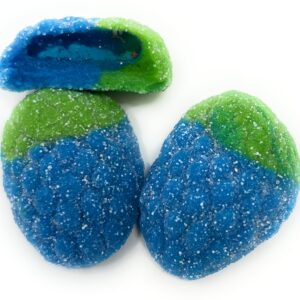
- Add one chewy gummy option such as the peach rings for texture contrast.
- Include one chocolate piece, noting milk or peanut allergens on the shelf tag.
- Carry one hard candy or coffee candy for the adult, slow-eat occasion.
- Finish with a mint to round the experience and prompt a small add-on.
Because the weights are uniform at roughly 2 lb, you can plan facings and reorder triggers without juggling odd pack sizes. That consistency is useful when you set par levels per facing, and it makes a sugar-free endcap easy to reset to a known planogram each time stock turns.
Retail versus foodservice fit
For retail, the bulk 2 lb formats suit repack programs, gravity bins, scoop bins, and pre-weighed grab bags positioned near checkout or in a wellness aisle. The stevia-sweetened mixed berry and green apple lines read well to a natural-foods shopper who reacts to the sweetener on the front of pack. For foodservice and hospitality, sugar-free hard candy and coffee candy work as front-desk or table offerings where guests appreciate an option that fits their diet. Care facilities and clinics sometimes request sugar-free specifically, so a steady licorice and hard-candy core can serve those institutional reorders. The bulk format is convenient for both channels: a retailer repacks into branded bags, while a foodservice account draws from the same case for a bowl or dispenser.
Building the assortment and planning reorders
Start narrow and let data widen the set. A first order covering licorice, one gummy, one chocolate, and one hard candy tests demand across the textures without overcommitting. Track which formats clear fastest and expand within that texture before adding new ones. Sugar-free tends to draw repeat purchasers once they find a product they like, so reorder cadence often settles into a predictable rhythm; watch your fastest movers and tighten par levels on those rather than spreading thin across all 17. The licorice depth gives you room to grow within a single texture, which is lower risk than chasing every format at once.
For distribution, the group ships to both US and Canadian zones. Quote and plan in USD with CAD awareness for cross-border accounts, and factor the longer transit and any documentation that imported confectionery requires when you set reorder timing. Consolidating sugar-free items into a single order line where possible keeps freight efficient and your par levels easier to maintain across the section. Building a small safety buffer on your two or three best movers protects against the stockout that sends a loyal sugar-free shopper to another store.
Used this way, the sugar-free group becomes a real merchandising decision rather than a checkbox. The variety supports a destination set, the uniform weights keep planning clean, and disciplined label-reading keeps your claims honest for both retail and foodservice customers in the US and Canada.
Direct Importer
European candy, sourced at origin
Open to Everyone
Retail & wholesale · 3 kg minimum order
Net-30 (approved)
Flexible terms for qualified accounts
US + Canada Shipping
Two shipping zones, one supplier
Matching this requirement
Frequently asked questions
How many sugar-free products are available and what types do they cover?
The sugar-free group holds 17 bulk products spanning licorice, hard candy, chocolate, gummies and jellies, and mints, sourced from Italy, the USA, Finland, Greece, Holland, and Sweden.
Are these products certified sugar-free or safe for a medical condition?
We do not make certification or medical claims. Items are grouped because their listings carry a sugar-free attribute. Confirm the sweetener system and any claim on each product page and the manufacturer packaging before you order or represent it to customers.
Do sugar-free items still carry allergens?
Yes. Products in this category have listed soy, tree nuts, peanuts, wheat, and milk among allergens. Sugar-free does not mean allergen-free, so read each ingredient panel and keep allergen call-outs visible on your shelf.
What brands are represented?
Mangini, Italgum, Finnska, Pallas, Gustaf, Bubs Godis, Albanese, and Sconza, with licorice carrying the most depth across the assortment.
What pack weights should I plan for?
Pack weights cluster between 2.0 and 2.2 lb, which keeps facings, par levels, and reorder math consistent across the set.
Does this assortment ship to Canada as well as the US?
Yes, the group ships to both US and Canadian zones. Plan in USD with CAD awareness for cross-border accounts and allow for import transit and documentation when setting reorder timing.
How should I start an assortment?
Begin narrow with licorice, one gummy, one chocolate, and one hard candy. Track fastest movers, then expand within those textures before broadening across all 17 SKUs.
Retail or wholesale. Accounts optional.
Anyone can order — retail shoppers, shops and businesses — with a 3 kg minimum order (about 6.6 lb), mix and match. Buying regularly? Open a wholesale account for account pricing, Net-30, and order management, or request a quote for pallets and custom assortments.