
By the form factor · Bulk & by the case
Wholesale Candy Tins: Bulk Tinned Sweets for Retail and Resale
Quick answer
We have 12 candy tins, including Austrian sanded fruit drops and German nougat-pistachio filled drops. Retail shoppers and wholesale buyers order the same way across the US. Everything sells by the case, with no minimum order.
Tins are the small format here, just 12 of them. What a shopper gets is something to keep. The container is reusable, and it reads as a gift and a keepsake together. That’s why tins sell differently from a bag or a bin. Most of ours are German sanded drops and filled hard candies. Tins run 175 g to 200 g, and pack weights go from about 0.85 lb to 2.2 lb per item. They hold up on a shelf. They travel well too. Shoppers reuse the empty tin for small storage, which is a quiet bit of word of mouth.
What comes in tins
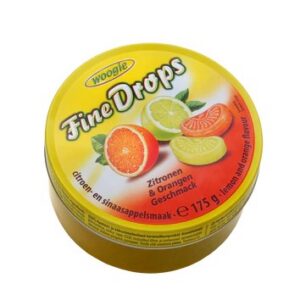
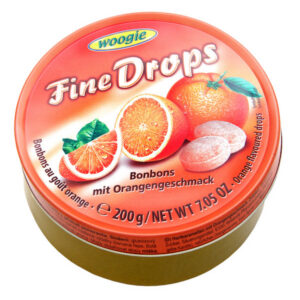
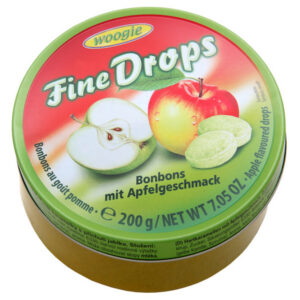
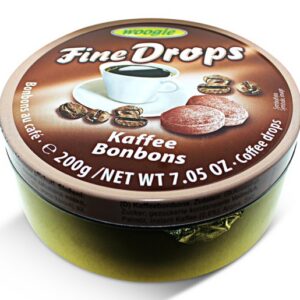
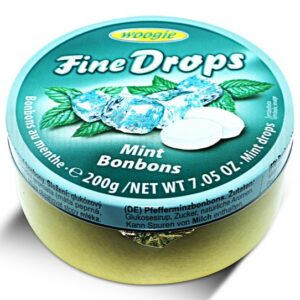
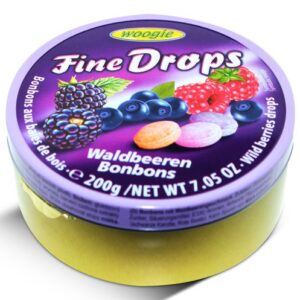
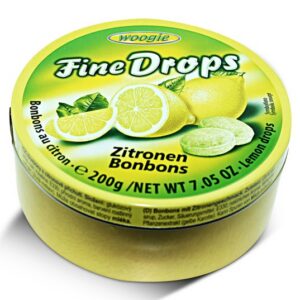
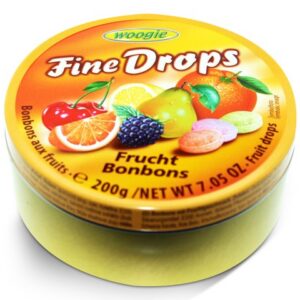
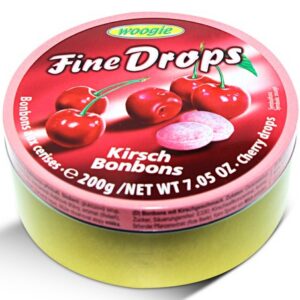
Think hard candy and mints. There’s sour candy and one marzipan-nougat flavor. The German Fine Drops line carries the section. Those are sanded drops in cherry and mixed fruits. Lemon and forest berries too. Then mint and coffee. Apple and orange round it out, along with raspberry and a lemon-and-orange mix. All come in tidy 175 g and 200 g tins. Beside them sit a sour lemon candy drops tin and a Mozart-style filled drop tin in nougat and pistachio. Origin is Austria and Germany, so the whole section feels like one European import set. Colors are yellow and red. Green and orange show up, plus brown and assorted. They track the fruit flavors closely, which means a flavor wall and a color wall are the same display.
Why tins merchandise well
Tins are sturdy and stackable. They’re hard to damage and easy to display. The flat profile lets you step them up in a window or on a counter. Shoppers pick one up even when they aren’t buying for themselves. A tin also keeps its shape on a crowded shelf where a bag would slump.
- Build a flavor wall by lining up the Fine Drops by color. Cherry and lemon sit next to forest berries. Mint and orange fit in too.
- Put tins at the register as an impulse buy. The gift look earns add-on sales.
- Group tins into a ready-made gift set or multi-tin bundle for the gifting season.
- Stack and step them in a window display. The rigid container takes the weight.
- Set a coffee or mint tin near the cafe or checkout coffee station as a themed pairing.
The flavor lineup as a buying tool
The Fine Drops line is the strength of this section. Ten sanded-drop flavors in matching 175 g and 200 g tins means only the color and flavor name change from facing to facing. That reads like a deliberate collection. It also makes buying simple, since you can scale the whole line up or down for a season in one decision. We’d bring in cherry and forest berries ahead of a gifting peak. Lemon and mint and orange stay in steady rotation. The sour lemon tin and the nougat-and-pistachio Mozart-style tin sit slightly apart. One is for the shopper who wants something tart. The other has a richer, gift-leaning feel. Add them to the full Fine Drops range and a twelve-SKU section looks bigger than it is. Austrian and German origin helps too. A shopper sees one origin story across the wall, so you can price tins above a plain bag of the same candy.
Gifting season is the tin’s prime window
Along with boxes, tins are our most seasonal format. A tin is a small gift all on its own. Demand bunches up around the gifting season and any host or thank-you occasion. Order early so the flavor wall is full before gift shopping starts. Then push multi-tin bundles while traffic is high. Off-peak, tins still work as a counter impulse. Since the contents are shelf-stable hard candy, you can bring stock in well ahead of a peak. Spoilage isn’t the worry it is with chocolate.
Handling and ordering
Tins are the easiest format in the catalog to ship. Chocolate melts. Hard candy and mints don’t, and sour drops and filled drops are the same. The metal shell also takes a knock better than a bag or a thin carton does. Looks are the one handling worry. A dented tin loses its gift appeal even when the candy’s fine, so we’d keep cases from getting dropped or over-stacked and pull any marked tin off the gift display. Case counts differ by item. Several lines come as 3-piece or 5-piece cases, and the product page lists the case quantity.
Allergens and diets
Milk and tree nuts are the allergens most often present. Peanuts too. That mostly reflects the filled and nougat-pistachio items, not the plain sanded drops. So the sanded fruit drops are an easy pick when someone wants plain hard candy. Still check each label. No tin here has a recorded special-diet or kosher flag in our data. Verify any diet or kosher need on the product page. We ship within the United States. Heat doesn’t bother tins much. If chocolate would be a risk on your season or route, tins are what we’d lean on. A two-tier gift shelf works with boxed pralines above and tins below. Bulk bins and bagged lines can sit nearby for everyday candy.
Direct Importer
European candy, sourced at origin
Open to Everyone
Retail & wholesale · no minimum order
Secure card checkout
Pay by card, order confirmed on payment
Nationwide US Shipping
Shipped across the United States


Available in this format
Filter
Nothing is tagged Tins at the moment, so here are the closest matches from our current catalog.

Need a specific item or a larger volume? Request a quote.
Frequently asked questions
What candy comes in the tins?
Hard candy and mints. Sour candy and a marzipan-nougat flavor too. The core is German Fine Drops sanded drops in cherry and lemon. Mixed fruits and forest berries follow. Mint too. Coffee and apple are there. So are orange and raspberry. There’s also a sour lemon tin and a Mozart-style filled drop tin.
What sizes are the tins?
Most run 175 g to 200 g. Pack weights go from about 0.85 lb to 2.2 lb per item. Several lines come in 3-piece and 5-piece case depths.
Why do tins work for gifting?
A tin is a small gift with a reusable container, so it reads as a present. Demand peaks in gifting season. Multi-tin bundles make ready-made gift sets.
Do tins ship well?
Yes. The contents are heat-stable hard candy and mints. The rigid metal container also resists crushing better than a bag or thin carton.
What should I check when tins arrive?
Mostly looks. A dented tin loses gift appeal even if the candy’s fine. Don’t drop cases or over-stack, and pull marked units off the gift display.
Which allergens are in tins?
Milk and tree nuts show up most. Peanuts too. That reflects the filled and nougat-pistachio items more than the plain sanded drops. No tin has a recorded special-diet or kosher flag in our data, so check the product page.
Can you ship tins outside the US?
No. We only ship within the United States. Wholesale accounts can pay by card at checkout, and every order goes out by the case.
Retail or wholesale. Accounts optional.
Two price lists, one catalog. Everyone gets our importer-direct retail price, already well below typical shelf prices, and you don’t need an account or a minimum order to buy. If you’re coming back often, it’s worth applying for a wholesale account, since approved accounts pay less per case and get order management on top. Bigger order, or a mix you can’t find in the catalog? Just ask us for a quote.