
By the form factor · Bulk & by the case
Bagged
Quick answer
Candy supplied in resealable bags is available to order by the case from CandiesWholesaler for buyers across the US and Canada — shops and private customers alike, with a 3 kg minimum. Order imported European candy for resale, gifting, and events. Prices are shown to everyone; open a wholesale account for account pricing and Net-30 if you order regularly.
The bagged format covers 55 wholesale products built for shelf and peg merchandising, where each unit is its own pre-portioned, scannable item. Unlike loose bulk, a bag is a finished retail package: priced, sealed, and ready to set on a peg hook or a shelf facing without any repacking on your end. Pack weights run from about 0.66 lb up to 3.53 lb per bag, which spans single-serve impulse sizes through larger sharing and pantry sizes. That range makes bagged candy a natural fit for stores that want clean SKUs, fast checkout, and a tidy planogram, and it suits operators who do not have the floor space, labor, or licensing appetite for an open bulk wall. With bags, the work of weighing, sealing, and pricing is already done, so a small shop can carry a wide imported selection with very little overhead.
What the bagged range includes
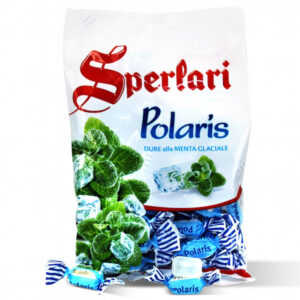
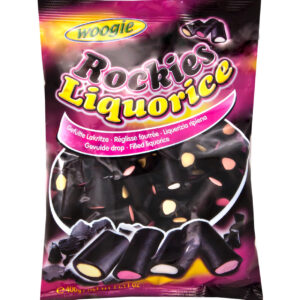
Bagged candy here leans into hard candy, mints, gummies and jellies, licorice, chocolate, toffee and caramel, marzipan and nougat, and a general other-candy group. The hard candy and mint selection is deep, with menthol and eucalyptus, anise, glacier mint, and mint-and-fruit assortments in both 7.05 oz and larger 17.64 oz bags, so you can carry a small impulse facing and a take-home size of the same line without sourcing them separately. Beyond the candy counter, you will find marzipan potatoes dusted in cocoa, rose-water sugar-dusted jellies, sesame halva snack bags in vanilla, cocoa-nib, and pistachio, strawberry and licorice wheels, Dutch black licorice and fruit rockies, and fruit gellie assortments. The origin mix runs across Italy, Greece, Holland, the USA, the Czech Republic, Germany, Israel, and Sweden, which supports an imported-specialty story on the shelf and lets you group facings by country for shoppers who browse by where a candy comes from. Colors recorded across the section, brown, black, green, yellow, assorted, and red, give you enough variety to build a lively shelf set.
Shelf and peg fit
Bags are the easiest format to plan a planogram around because each one is a fixed facing with a fixed price. Smaller 7 oz style bags hang well on peg hooks in a checkout lane or an end-cap impulse strip, while the heavier 17 oz and 500 g bags sit better on a shelf where their weight will not bend a hook or pull a peg loose. Group by line so a shopper sees the flavor range together, and use the larger sizes to anchor the bottom shelf with the lighter impulse sizes above at eye level. Because the bagged catalog also includes a few items recorded in bar and bulk forms, you can build a bagged section that bridges naturally into adjacent fixtures.
- Peg the lighter impulse bags at lane-end and checkout for unplanned add-on sales.
- Shelve the larger sharing and pantry bags where their weight is supported and the value size reads clearly.
- Cluster mint and hard-candy lines together so menthol, anise, and glacier mint cross-sell as a set.
- Use marzipan, halva, licorice, and rose-water jelly bags to build an imported-specialty section that stands apart from mainstream candy.
- Set a small origin-grouped display to serve shoppers hunting for German, Greek, Dutch, or Italian sweets specifically.
Pricing tiers and shopper intent
The two-size pattern in the mint and hard-candy lines is worth using deliberately. A 7 oz bag is an impulse and trial size: a shopper who has never tried anise or glacier mint will risk a smaller bag, and once they like it they trade up to the 17 oz size for the value per ounce. Carry both facings of a line and you capture the first-time buyer and the loyal repeat buyer with a single source order. The specialty bags work on a different intent entirely. Marzipan potatoes, rose-water jellies, Dutch licorice and fruit rockies, and the sesame halva snack bags are sought out by shoppers who already know the product and are looking for it specifically, often as a taste of home or a remembered import. Those buyers are less price-sensitive and more loyal, so a small but consistent specialty facing can outperform its shelf space. Treat the hard-candy core as your traffic and volume driver and the specialty bags as your margin and loyalty anchor.
Ordering, breakage, and heat
Bagged items are cased in set unit counts, and those counts vary widely between lines, so confirm the case quantity and the pieces per order on each product page before you commit. The chocolate bags in this range carry the usual warm-weather caution, but most of the bagged volume is hard candy, mints, jellies, licorice, and halva, which hold up better in transit than soft chocolate and make the format a relatively low-risk year-round order. The flip side is physical handling: sealed bags can split at the seam if cases are dropped or stacked too high, and sugar-dusted jellies can shed their coating with rough handling, so receive these with a light touch and avoid crushing the lighter bags under heavier cases. A split bag is unsellable, so careful receiving and shelf rotation directly protect your margin in this format.
Allergens and diet labeling
The allergens most often present across bagged products are tree nuts, milk, soy, wheat, peanuts, and eggs, which reflects the marzipan, halva, nougat, and chocolate items in the mix. Because each bag is a sealed, labeled unit, allergen information travels with the product, which makes it easier to answer shopper questions than at an open bin. None of the bagged items in this section carry a recorded special-diet or kosher flag in our current data, so do not market a bag as sugar-free, gluten-free, vegan, or kosher unless that specific product page confirms it. When a customer asks about a diet need, point them to the individual product page where the label detail lives.
Assortment, reorder, and cross-border shipping
Because bags are finished retail units, they are the lowest-effort way to expand an assortment: add a line, set the facing, and you are selling, with no scale, scoop, or bin maintenance. Build the section around a steady mint-and-hard-candy core, then rotate seasonal jellies, licorice, marzipan, and halva around it to keep the shelf fresh. Reorder cadence is easier to read with bags than with bulk because each unit sale is a clean count rather than a weight draw-down, so set par levels per facing and reorder by the case. We ship to both the United States and Canada; bagged candy travels cross-border well thanks to its sealed, mostly heat-stable mix, though you should still consolidate Canadian orders to keep freight efficient and watch the few chocolate bags in warm weather. Pair the bagged section with bulk bins for the by-weight shopper and with tins or boxes for gift buyers to cover the full counter from one supplier, and use the bagged format as the easy entry point if you are testing an imported-candy program before committing to a full bulk wall.
Direct Importer
European candy, sourced at origin
Open to Everyone
Retail & wholesale · 3 kg minimum order
Net-30 (approved)
Flexible terms for qualified accounts
US + Canada Shipping
Two shipping zones, one supplier
Available in this format
Filter
Frequently asked questions
What sizes do bagged candies come in?
Bag weights run from about 0.66 lb to 3.53 lb. Lines like the mint and hard-candy bags come in both smaller impulse sizes around 7 oz and larger take-home sizes around 17 oz.
Are bagged items ready to sell without repacking?
Yes. Each bag is a finished, sealed, scannable retail unit that you set straight onto a peg hook or shelf facing, with no scale or repacking needed.
Which bagged items hang best on pegs?
Lighter impulse bags around 7 oz hang well on peg hooks at checkout and end-caps. Heavier 17 oz and 500 g bags are better shelved where their weight is supported.
How do I avoid damage to bagged candy?
Receive bags with a light touch; sealed bags can split at the seam if dropped or over-stacked, and sugar-dusted jellies can shed their coating with rough handling. A split bag is unsellable.
Are any bagged items kosher or special-diet?
Our current data shows no recorded special-diet or kosher flag for the bagged section. Check the individual product page before marketing any bag as sugar-free, gluten-free, vegan, or kosher.
How is bagged candy cased for ordering?
Case unit counts vary widely between lines. Confirm the case quantity and pieces per order on each product page before placing your order.
Do bagged orders ship to Canada?
Yes. We ship to both the US and Canada, and the mostly heat-stable bagged mix travels cross-border well. Consolidate Canadian orders to keep freight efficient and watch the few chocolate bags in warm weather.
Retail or wholesale. Accounts optional.
Anyone can order — retail shoppers, shops and businesses — with a 3 kg minimum order (about 6.6 lb), mix and match. Buying regularly? Open a wholesale account for account pricing, Net-30, and order management, or request a quote for pallets and custom assortments.